
10 Common Reasons Your Check Engine Light Is On (And What to Do Next)
What Your Check Engine Light Is Trying to Tell You

A check engine light can be frustrating because it rarely tells you exactly what's wrong. While some causes are relatively minor, others can affect engine performance, fuel economy, emissions, or even lead to expensive repairs if ignored. The good news is that the warning light is designed to alert you before many problems become catastrophic. Understanding the most common causes, recognizing the warning signs, and knowing when to seek diagnosis can help you make informed maintenance decisions while potentially avoiding more costly repairs down the road.
Key Takeaways
A check engine light is your vehicle's way of telling you the engine management system has detected a fault that needs attention.
Some causes are minor, such as a loose gas cap, while others can indicate ignition, fuel system, emissions, or internal engine problems.
A flashing check engine light usually indicates a severe engine misfire and should be addressed immediately.
Reading the diagnostic trouble code (DTC) is the first step toward identifying the root cause. A trouble code identifies the affected system, not necessarily the failed part.
Preventive maintenance, proper lubrication, and keeping the fuel system clean can help reduce the likelihood of some engine performance issues that may contribute to diagnostic trouble codes over time.
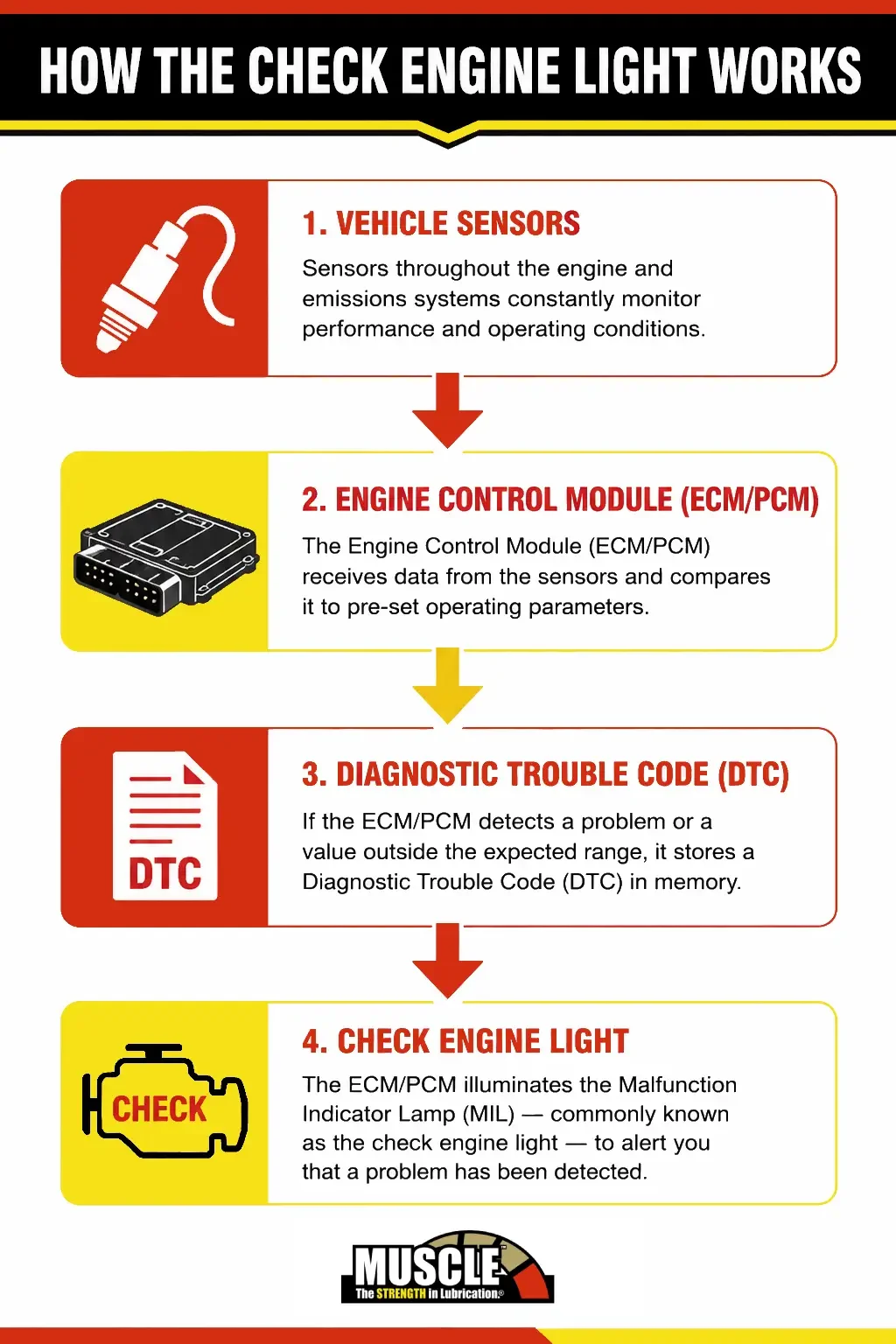
Modern vehicles constantly monitor engine performance through dozens of sensors, control modules, and onboard diagnostics. When one of those systems detects an operating condition outside of its expected range, it stores a diagnostic trouble code and illuminates the Check Engine Light, also known as the Malfunction Indicator Lamp (MIL).
For many drivers, seeing this warning light immediately raises concerns about expensive repairs. In reality, the problem could be something as simple as a loose fuel cap or as serious as an engine misfire that risks damaging the catalytic converter.
The challenge is that the warning light itself doesn't tell you exactly what's wrong. It only tells you that the engine management system has detected a condition requiring diagnosis.
Understanding what the check engine light means—and knowing what to do next—can help you make informed maintenance decisions, avoid unnecessary repairs, and potentially prevent small issues from becoming much larger ones.
In this guide, we'll explain the ten most common reasons the check engine light comes on, how each issue affects engine performance, and the steps you should take before replacing parts or making repairs.
What Does a Check Engine Light Mean?
The check engine light is part of your vehicle's On-Board Diagnostics (OBD-II) system. Since 1996, nearly every passenger vehicle sold in the United States has used OBD-II to continuously monitor engine operation, emissions systems, fuel delivery, ignition timing, airflow, exhaust composition, and many other operating parameters.
Every sensor throughout the engine communicates with the Engine Control Module (ECM) or Powertrain Control Module (PCM). These computers constantly compare incoming data against expected operating values. When a sensor reports information outside of those acceptable limits for a certain period of time, the computer stores a Diagnostic Trouble Code (DTC) and turns on the check engine light.
It's important to understand that a diagnostic code does not automatically identify the failed component.
For example, a code related to an oxygen sensor does not necessarily mean the oxygen sensor itself has failed. The underlying cause could instead be:
An exhaust leak
A vacuum leak
Poor combustion
Fuel delivery issues
Wiring or connector problems
Another engine condition affecting exhaust gas composition
This is why professional diagnosis always begins with reading the stored diagnostic codes before replacing components.
Can You Drive With a Check Engine Light On?
Whether it's safe to continue driving depends largely on how the warning light behaves and whether the vehicle is showing any additional symptoms.
A Steady Check Engine Light
A steady check engine light usually indicates a fault that should be diagnosed soon but may not require you to stop driving immediately.
If the vehicle continues to operate normally without unusual noises, overheating, excessive smoke, or significant loss of power, it's generally reasonable to schedule diagnosis as soon as practical rather than continuing to ignore the warning indefinitely.
Even relatively minor issues can reduce fuel economy, increase emissions, or place additional stress on engine components over time. Addressing problems early often helps prevent more expensive repairs later.
A Flashing Check Engine Light
A flashing check engine light should always be treated more seriously.
In many vehicles, a flashing MIL indicates an active engine misfire severe enough to allow unburned fuel to enter the exhaust system. When this happens, the catalytic converter can overheat rapidly, potentially causing permanent damage that may require costly replacement.
If the light begins flashing:
Reduce engine load immediately.
Avoid hard acceleration.
If safe, drive only far enough to reach a secure location or repair facility.
Arrange for diagnosis as soon as possible.
Ignoring a flashing check engine light can turn what began as a relatively straightforward ignition or fuel system repair into a much more expensive emissions system repair.
How Do You Find Out Why Your Check Engine Light Came On?
Before replacing parts—or assuming the worst—the first step is identifying the stored diagnostic trouble code.
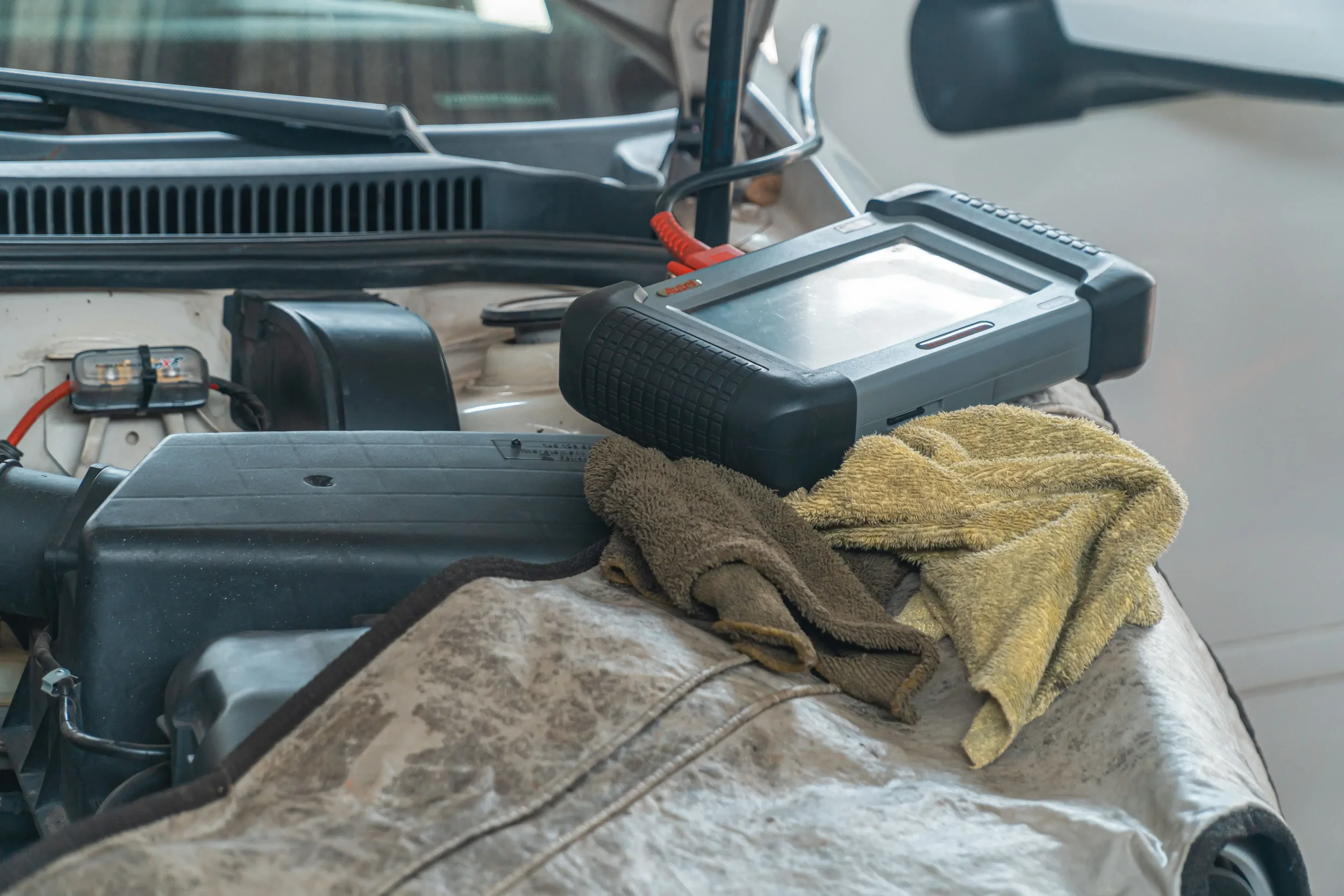
An OBD-II scan tool connects to your vehicle's diagnostic port and retrieves any active or stored codes from the engine computer. Many repair shops and some automotive parts stores can perform a basic code scan.
However, it's important to understand what those codes actually represent.
A diagnostic trouble code points technicians toward the system where a fault was detected. It does not automatically identify the failed part.
For example, a lean-condition code may ultimately be caused by:
A vacuum leak
Dirty fuel injectors
Low fuel pressure
A failing mass airflow sensor
Unmetered air entering the engine
Exhaust leaks affecting sensor readings
Replacing parts based solely on the code often leads to unnecessary expense without fixing the underlying problem.
Proper diagnosis involves evaluating the stored codes alongside live sensor data, operating conditions, service history, and physical inspection before determining the appropriate repair.
10 Common Reasons Your Check Engine Light Is On
1. Loose, Damaged, or Faulty Fuel Cap
It may sound surprisingly simple, but one of the most common reasons a check engine light appears is an improperly sealed fuel cap.
Your fuel cap does much more than keep fuel inside the tank. It also seals the evaporative emissions (EVAP) system, preventing gasoline vapors from escaping into the atmosphere. The engine management system periodically performs self-tests on this sealed system. If it detects that pressure cannot be maintained, it may trigger a diagnostic trouble code and illuminate the check engine light.
Common causes include:
A fuel cap that wasn't tightened until it clicked
A cracked or damaged cap
A worn sealing gasket
Damage to the filler neck preventing a proper seal
Fortunately, this is often one of the easiest issues to correct. After ensuring the fuel cap is properly tightened or replacing a damaged cap, the vehicle may clear the warning after several normal drive cycles if no other faults are present.
If the light remains on, further diagnosis of the EVAP system may be necessary, as leaks can also occur in hoses, valves, charcoal canisters, or other evaporative emissions components.
2. Faulty Oxygen (O₂) Sensor
One of the most common causes of a check engine light is a failing oxygen sensor.
Modern engines use oxygen sensors to continuously measure the amount of oxygen remaining in the exhaust gases after combustion. The Engine Control Module (ECM) uses this information to adjust the air-fuel mixture, helping the engine maintain efficient combustion while reducing emissions and maximizing fuel economy.
Over time, oxygen sensors naturally degrade from repeated exposure to heat, carbon deposits, fuel contaminants, and thousands of heating and cooling cycles. As they become slower to respond or begin sending inaccurate data, the ECM may compensate by enriching or leaning the fuel mixture more than necessary. This often results in reduced engine efficiency before drivers notice any obvious performance problems.
Common symptoms include:
Reduced fuel economy
Rough idle
Hesitation during acceleration
Increased exhaust emissions
Check engine light
It's important to remember that an oxygen sensor code does not automatically mean the sensor itself has failed. Exhaust leaks, vacuum leaks, ignition problems, or poor combustion can all affect exhaust composition and cause similar diagnostic codes. Proper diagnosis should always be performed before replacing components.
3. Worn Spark Plugs or Failing Ignition Coils
Every gasoline engine relies on a strong, consistent spark to ignite the compressed air-fuel mixture inside each cylinder. Spark plugs and ignition coils work together to provide that spark thousands of times every minute while the engine is running.
As spark plugs wear, electrode gaps increase and ignition efficiency declines. Likewise, ignition coils can weaken over time from heat, vibration, and age. When either component begins to fail, combustion becomes less consistent, allowing individual cylinders to misfire.
Engine misfires are one of the most common reasons the check engine light illuminates. If severe enough, the warning light may begin flashing to indicate a condition that could damage the catalytic converter.
Drivers may notice:
Rough idle
Loss of engine power
Hesitation during acceleration
Increased fuel consumption
Engine vibration
Difficult starting
Replacing spark plugs at the intervals recommended by your vehicle manufacturer helps maintain reliable ignition performance and reduces unnecessary stress on the ignition system.
If your vehicle is also experiencing reduced acceleration or sluggish performance, you may find our article "Why Your Engine Is Losing Power (And How to Fix It)" helpful for understanding other factors that can affect engine output.
4. Dirty Fuel Injectors or Poor Fuel System Performance
Your engine depends on fuel being delivered in precise amounts and atomized into an extremely fine mist before combustion occurs. When fuel injectors become dirty or internal deposits begin restricting proper spray patterns, combustion efficiency can decline.
Instead of producing a fine, evenly distributed fuel spray, contaminated injectors may create uneven fuel delivery, incomplete combustion, rough operation, and increased fuel consumption. The engine management system often detects these changes through oxygen sensor feedback and other monitored operating parameters, eventually triggering a diagnostic trouble code.
Fuel system contamination may also contribute to:
Hesitation during acceleration
Rough idle
Poor throttle response
Reduced fuel economy
Increased emissions
While severely clogged injectors or mechanical failures require proper repair, keeping the fuel system clean remains an important part of preventive maintenance.
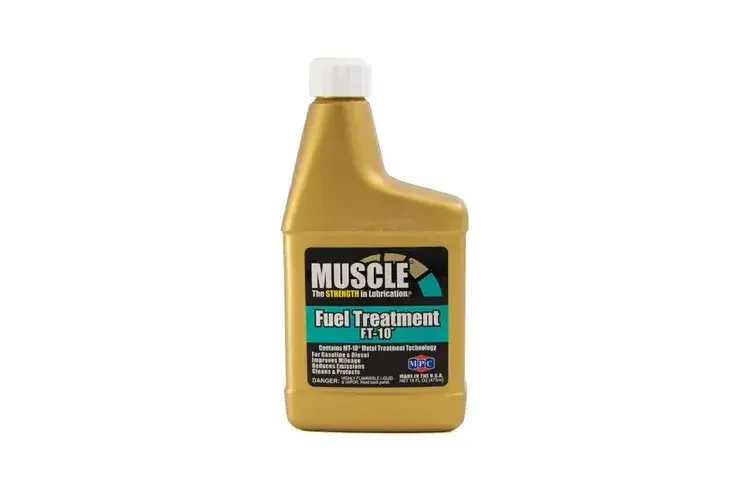
Fuel Treatment FT-10™ is formulated to clean and protect the fuel system, improve fuel atomization, provide upper cylinder lubrication, disperse moisture in the fuel, and support overall engine performance. A cleaner fuel system promotes more consistent combustion and improved fuel delivery, helping engines operate more efficiently over time.
It's important to note that no fuel additive should be viewed as a repair for failed injectors, faulty sensors, or mechanical problems. Instead, products such as FT-10™ are best used as part of an ongoing maintenance program designed to help maintain fuel system cleanliness before significant deposits develop.
If you're interested in learning more about how combustion efficiency affects fuel consumption, our article "How to Get Better Gas Mileage and Save Money on Fuel" explores the relationship between cleaner combustion, fuel economy, and overall engine performance.
5. Mass Air Flow (MAF) Sensor Problems
Before the engine can determine how much fuel to inject, it first needs to know how much air is entering the intake system.
That job belongs to the Mass Air Flow (MAF) sensor.
Located between the air filter and throttle body on many vehicles, the MAF sensor measures incoming airflow so the ECM can calculate the proper air-fuel ratio under changing engine loads and operating conditions.
If the sensor becomes contaminated with dirt, oil residue, or debris, it may begin reporting inaccurate airflow information. The result is an engine that struggles to maintain efficient combustion because the calculated fuel delivery no longer matches the actual amount of air entering the engine.
Symptoms often include:
Rough idle
Hesitation during acceleration
Reduced engine power
Poor fuel economy
Hard starting
Check engine light
Sometimes the problem isn't the sensor itself. A clogged air filter, intake leak, damaged wiring, or aftermarket intake modifications can also affect airflow readings and trigger diagnostic codes.
Proper diagnosis should always verify the entire intake system before replacing the MAF sensor.
6. Catalytic Converter Problems
The catalytic converter is one of the most important emissions-control components on your vehicle. Its job is to convert harmful exhaust gases into less harmful emissions before they leave the tailpipe.
Catalytic converters rarely fail without an underlying cause.
In many cases, they're damaged by other engine problems that have gone unresolved, such as repeated ignition misfires, excessive oil consumption, rich fuel mixtures, or prolonged combustion issues. When unburned fuel enters the exhaust system, temperatures inside the converter can rise dramatically, damaging the internal catalyst.
Common warning signs include:
Reduced engine performance
Poor acceleration
Sulfur or "rotten egg" odor from the exhaust
Reduced fuel economy
Check engine light
Because catalytic converters are expensive to replace, correcting engine performance problems early is often the best way to protect them.

Routine maintenance, proper ignition performance, and maintaining clean combustion all help reduce unnecessary stress on the emissions system. Addressing issues before they develop into prolonged misfires or excessive fuel enrichment can often prevent secondary catalytic converter damage.
7. Vacuum Leaks
Your engine depends on a carefully controlled balance of air and fuel to operate efficiently. Any air entering the engine that isn't measured by the Mass Air Flow (MAF) sensor is known as unmetered air. When this happens, the engine control module may struggle to maintain the proper air-fuel ratio, often triggering a check engine light.
Vacuum leaks commonly develop as rubber hoses, intake gaskets, and plastic fittings age. Heat cycling, vibration, and normal wear can eventually cause these components to crack, loosen, or deteriorate.
Because additional air is entering the intake system without being measured, the engine often runs lean. To compensate, the ECM adjusts fuel delivery, but if correction limits are exceeded, a diagnostic trouble code may be stored.
Common symptoms include:
Rough or unstable idle
High idle speed
Hesitation during acceleration
Whistling or hissing noises
Reduced fuel economy
Check engine light
Vacuum leaks are frequently misdiagnosed because they can produce symptoms similar to failing oxygen sensors or mass airflow sensors. Proper diagnosis should include a visual inspection, smoke testing when appropriate, and verification of fuel trim data before replacing electronic components.
8. Evaporative Emissions (EVAP) System Problems
Modern vehicles are designed to prevent gasoline vapors from escaping into the atmosphere. The evaporative emissions (EVAP) system captures those vapors and routes them back into the engine to be burned during normal operation.
The system includes components such as:
Purge valves
Vent valves
Charcoal canisters
Vapor lines
Fuel tank pressure sensors
Fuel cap sealing components
If any part of this sealed system develops a leak or fails to operate correctly, the onboard diagnostics system may detect an abnormal pressure change and illuminate the check engine light.
Unlike many engine faults, EVAP problems often produce few noticeable drivability symptoms. Many drivers experience nothing more than the warning light itself.
Although EVAP faults typically don't affect immediate engine performance, they should still be diagnosed promptly to maintain proper emissions system operation and prevent additional faults from developing.
9. Engine Wear, Friction, and Reduced Mechanical Efficiency
Not every check engine light is caused by a failed sensor.
As engines accumulate mileage, normal wear gradually changes how efficiently internal components operate. Piston rings, cylinder walls, bearings, timing components, and valve train parts all experience wear over thousands of operating hours.
As friction increases and internal clearances change, engines may begin operating less efficiently. In some cases, this contributes to increased oil consumption, reduced compression, poor combustion efficiency, or excessive blow-by. While these conditions don't always trigger a check engine light directly, they can contribute to operating conditions that eventually generate diagnostic trouble codes.
This is one reason preventative maintenance remains so important throughout an engine's life.
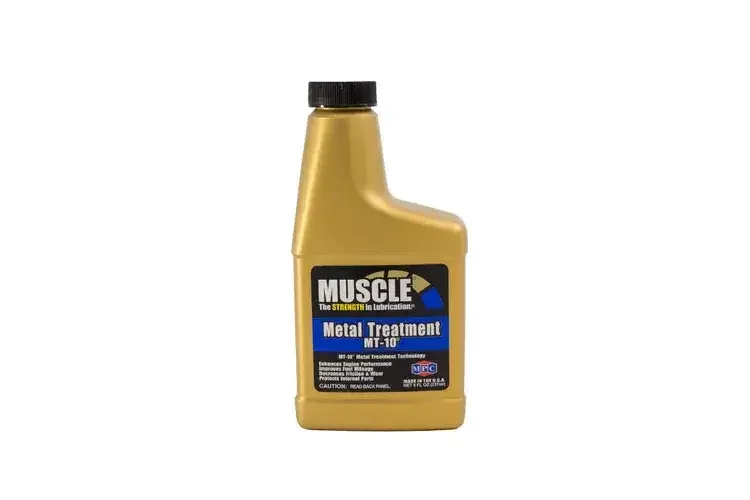
Metal Treatment MT-10® is formulated as an anti-friction additive designed to be used with the existing lubricant. Rather than functioning as a stand-alone lubricant, MT-10® helps improve the way lubricated metal surfaces interact under load by supporting protective boundary film formation. This helps reduce friction-related heat and wear while improving lubricity and load-carrying capacity.
Reducing friction cannot repair worn mechanical components or eliminate existing engine damage. However, reducing friction-related heat and protecting metal surfaces can help support smoother operation and improved long-term reliability as part of a comprehensive maintenance program.
If you'd like to learn more about how boundary lubrication affects engines and mechanical equipment, read our technical article Muscle MT-10® and Boundary-Film Lubrication: A Technical Explanation.
10. Fuel System Contamination and Poor Combustion
Efficient combustion depends on far more than simply delivering fuel to the engine. Moisture contamination, injector deposits, sticky valves, carbon accumulation, and poor fuel atomization can all reduce combustion efficiency over time.
As combustion quality declines, the engine management system may compensate by adjusting fuel trims, ignition timing, or other operating parameters. If these corrections exceed acceptable limits, diagnostic trouble codes may eventually be stored.
Fuel Treatment FT-10™ is formulated to clean and protect the fuel system while improving fuel atomization, dispersing water in the fuel, providing upper cylinder lubrication, and supporting cleaner combustion. A cleaner fuel system promotes more consistent fuel delivery and combustion efficiency, helping engines perform more smoothly over time.
It's important to recognize that products like FT-10™ are intended to support ongoing fuel system maintenance. They are not designed to repair failed injectors, damaged sensors, electrical faults, or other mechanical failures that may independently trigger a check engine light.
When used as part of a preventative maintenance program, maintaining a cleaner fuel system can help reduce deposit formation and support long-term engine performance.
What Should You Do If Your Check Engine Light Comes On?
The first step is simple: don't panic.
Many check engine light warnings are caused by issues that can be diagnosed and corrected before they become major repairs. Acting early often saves both time and money.
A practical approach includes:
Observe how the vehicle is running. Note any rough idle, unusual noises, reduced power, smoke, overheating, or warning lights.
Determine whether the light is steady or flashing. A flashing light should always be treated with greater urgency.
Check obvious items such as the fuel cap after your next stop.
Retrieve the diagnostic trouble codes using an OBD-II scan tool or have the vehicle scanned by a qualified repair facility.
Diagnose the underlying cause before replacing components. A stored code identifies the affected system, not necessarily the failed part.
Correct the root cause and verify the repair before clearing diagnostic codes.
Approaching the problem systematically often prevents unnecessary parts replacement while helping restore reliable engine performance.
Can Additives Fix a Check Engine Light?
One of the most common misconceptions is that adding a fuel treatment or lubricant additive will automatically turn off a check engine light.
In reality, the answer depends entirely on what caused the warning light in the first place.
If the check engine light is being caused by a failed oxygen sensor, damaged wiring, a faulty ignition coil, broken vacuum hose, or another mechanical or electrical failure, no additive can repair those components.
However, some diagnostic trouble codes are related to operating conditions that develop gradually over time. Carbon deposits, moisture contamination, reduced fuel atomization, sticking valves, poor combustion, and increased friction can all contribute to declining engine performance and efficiency. Addressing these conditions as part of a preventative maintenance program may help reduce the likelihood of certain performance-related issues developing over time.
For example:
Fuel Treatment FT-10™ is formulated to clean and protect the fuel system, improve fuel atomization, provide upper cylinder lubrication, disperse water in the fuel, and support cleaner combustion.
Metal Treatment MT-10® is formulated to reduce friction-related heat and wear by improving lubricity and supporting protective boundary film formation on lubricated metal surfaces.
Neither product should be viewed as a substitute for proper diagnosis or mechanical repair. Instead, they are intended to complement routine maintenance by helping engines operate more efficiently while protecting critical components under normal operating conditions.
How Can You Help Prevent a Check Engine Light?
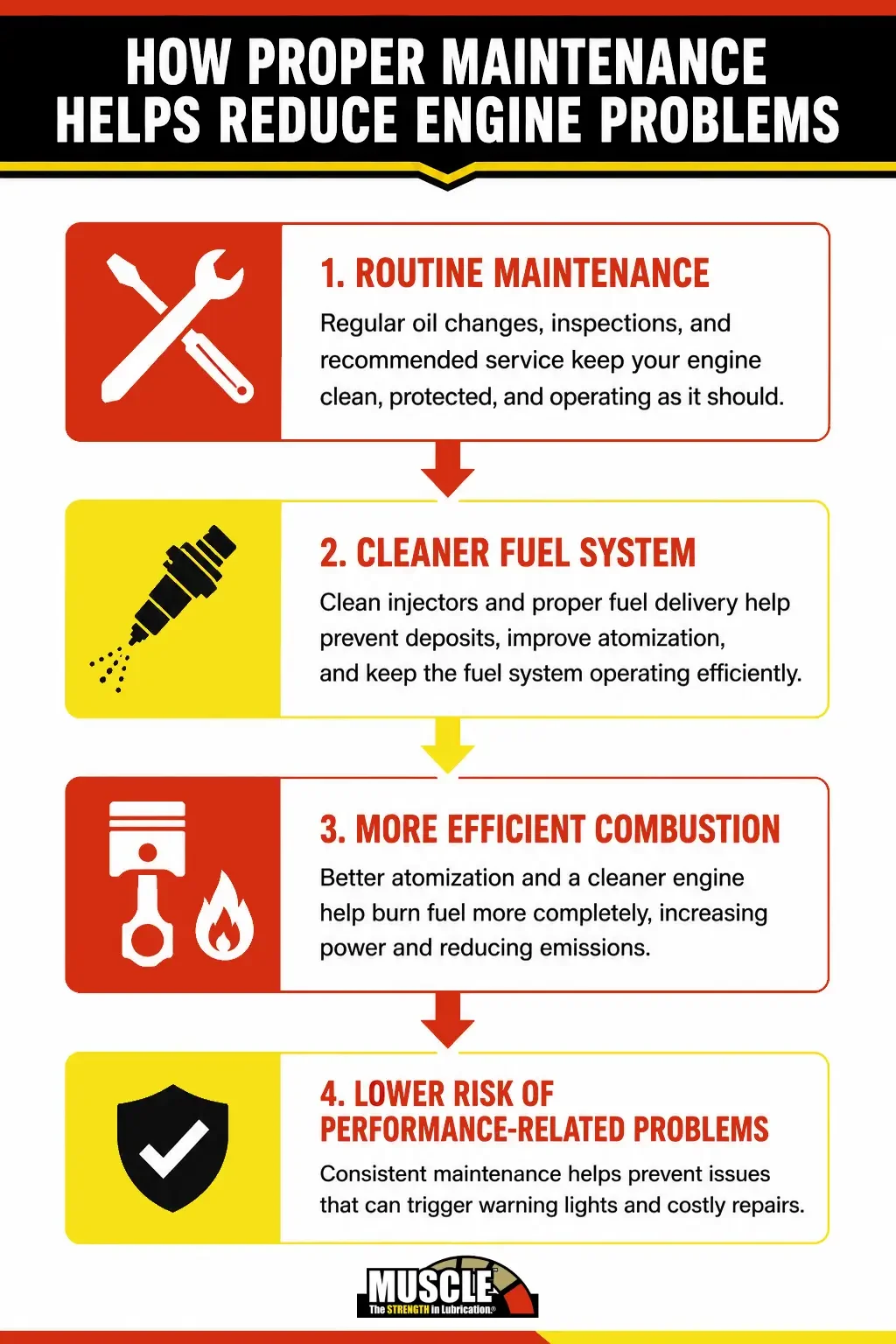
Not every check engine light can be prevented, but many common causes are related to maintenance items that gradually worsen over time. Staying ahead of routine service helps reduce unnecessary wear, improve engine efficiency, and minimize the chance of developing more serious problems later.
Good preventive maintenance includes:
Following the vehicle manufacturer's recommended oil and filter change intervals.
Replacing spark plugs and ignition components at the recommended service intervals.
Inspecting and replacing engine air filters when needed.
Addressing oil leaks, coolant leaks, and vacuum leaks before they become larger problems.
Keeping the fuel system clean with quality fuel and routine maintenance.
Responding promptly to changes in engine performance rather than waiting for a warning light to appear.
Routine maintenance also plays an important role in reducing friction, heat, and deposit formation inside the engine. Products such as Metal Treatment MT-10® and Fuel Treatment FT-10™ are designed to support these maintenance efforts by protecting lubricated metal surfaces and helping maintain a cleaner, more efficient fuel system. When used according to directions and alongside regular maintenance, they can help support long-term engine performance and reliability.
Frequently Asked Questions
-
The check engine light can illuminate whenever the engine management system detects an operating condition outside of its expected range. Common causes include sensor faults, ignition problems, fuel system issues, emissions system faults, vacuum leaks, or loose fuel caps.
-
Yes. A loose, damaged, or improperly sealed fuel cap can cause the evaporative emissions (EVAP) system to fail its self-test, triggering a diagnostic trouble code and illuminating the check engine light.
-
A flashing check engine light often indicates a severe engine misfire that may damage the catalytic converter if the vehicle continues operating under load. Reduce engine load immediately and have the vehicle diagnosed as soon as possible.
-
If the light is steady and the vehicle is operating normally, it may be safe to drive a short distance while arranging for diagnosis. If the light is flashing or the vehicle is experiencing significant performance problems, overheating, or unusual noises, it should be inspected immediately.
-
Disconnecting the battery may temporarily clear some stored diagnostic information on certain vehicles, but it does not repair the underlying problem. If the fault remains, the check engine light will typically return after the vehicle completes additional diagnostic self-tests.
-
Dirty fuel injectors may contribute to poor combustion, rough running, and fuel trim corrections that can eventually result in diagnostic trouble codes. Proper diagnosis should always be performed to identify the root cause before replacing components or attempting repairs.
-
Fuel additives cannot repair failed sensors, damaged electrical components, or mechanical failures. However, products designed to support cleaner fuel systems and improved combustion may help reduce deposit-related operating conditions when used as part of a preventive maintenance program.
-
The most reliable first step is retrieving the vehicle's diagnostic trouble codes using an OBD-II scan tool. Those codes provide valuable information about which system requires further diagnosis, although additional testing is often necessary to identify the exact cause.
Application Note
This article is provided for general educational purposes. Check engine light warnings can have many possible causes. Always follow the vehicle manufacturer’s recommendations and consult a qualified technician for proper diagnosis and repair. Muscle products are intended to support preventive maintenance and are not substitutes for mechanical repairs.