
Automatic Transmission Heat, Valve Body Sticking, and MT-10® Transmission
Why Automatic Transmissions Depend on Clean Fluid, Controlled Friction, Smooth Valve Movement, and Proper Lubrication
Originally published August 20, 2019. Updated June 23, 2026.
Key Takeaways:
Automatic transmission fluid does more than lubricate. It also transfers hydraulic pressure, cools internal parts, supports clutch engagement, and helps control friction.
Heat, varnish, wear debris, and metal-to-metal friction contribute to sticking valves, poor hydraulic response, harsh shifts, shudder, slipping, and premature wear.
MT-10® Transmission is designed to reduce friction-related heat and wear on treated metal surfaces inside automatic and standard transmissions.
MT-10® Transmission supports smoother valve movement and cleaner operation in service and rebuild applications, but it is not a repair for worn clutches, failed solenoids, pump damage, broken parts, or other mechanical failures.
MT-10® Transmission is not recommended for CVTs or CVT fluids. Use caution in wet-clutch systems and shared engine/transmission/clutch reservoirs.
Automatic transmissions depend on clean fluid, controlled friction, precise hydraulic movement, and properly lubricated metal components. When heat, varnish, wear debris, or metal-to-metal friction increase, shift quality and transmission life can suffer.
Muscle Metal Treatment MT-10® Transmission is designed for use in automatic and standard transmission applications where reducing friction-related heat and wear in metal contact areas is important. Since 1986, it’s been commonly used by transmission rebuilders, service professionals, and vehicle owners looking for added protection in their transmissions.
MT-10® is not a replacement for the correct transmission fluid. Always use the fluid type and service procedure specified by the vehicle or transmission manufacturer.
Three Common Automatic Transmission Problem Areas
Issues with automatic transmission operation and longevity usually begin in three related areas:
Heat
Valve body operation
Wear debris and varnish buildup
In older transmissions, governor operation can also be a concern.
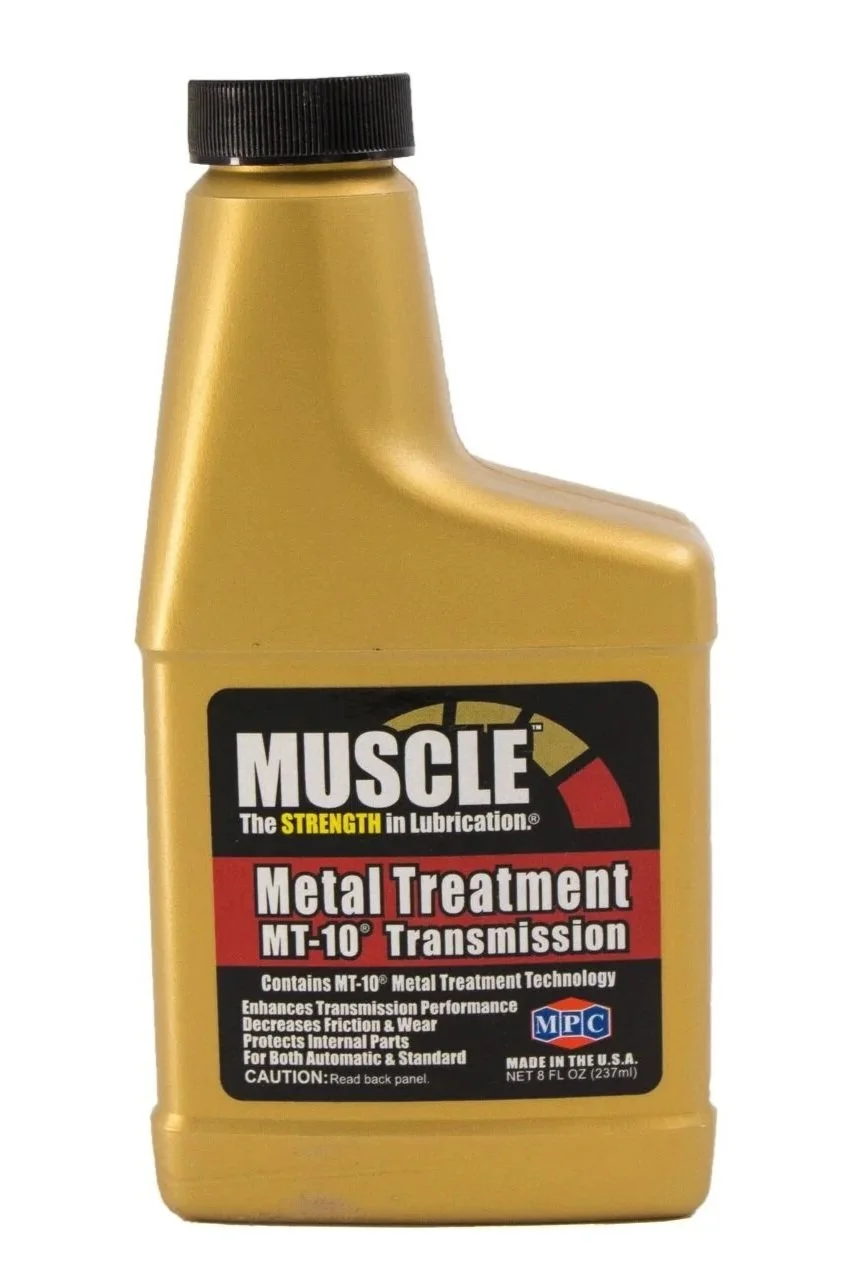
MT-10® Transmission is formulated to reduce friction-related heat in metal contact areas. It treats metal surfaces instead of building up a coating. This is important because excessive surface buildup can interfere with tight-tolerance transmission components, including valve-body parts, sprags, roller clutches, bushings, bearings, gears, and thrust surfaces.
MT-10® reduces friction and improves lubrication in high-pressure metal-contact areas such as:
Planetary gear systems
Bearings
Bushings
Shafts
Thrust washers
Gears
Pump and stator areas
By reducing metal-to-metal friction, MT-10® lowers friction-related heat and wear in automatic transmission applications.
Valve Body Operation and Varnish
The valve body is one of the most important control centers in an automatic transmission. It routes fluid pressure through small passages, valves, check balls, accumulator circuits, and related control areas. In newer transmissions, solenoids and electronic controls also play a major role.
When varnish, dirt, oxidation byproducts, carbon, or microscopic metal particles build up inside these areas, valves can stick or move inconsistently. This can lead to symptoms like delayed engagement, harsh shifts, soft shifts, flare, shudder, intermittent shift complaints, or poor hydraulic response.
MT-10® Transmission is designed to treat metal surfaces and help reduce friction where valves and related metal components move. In service and rebuild applications, this promotes smoother valve movement and reduces the tendency for wear debris to contribute to recurring sticking.
MT-10® is not a cure for mechanical damage. If a valve body is warped, a solenoid has failed, a clutch pack is worn, a pump is damaged, or metal fragments are present, the transmission must be properly diagnosed and repaired.
Governor Operation in Automatic Transmissions
Many older automatic transmissions use governor systems that can become sensitive to contamination, wear particles, varnish, or microscopic metal surface irregularities. These conditions can cause intermittent sticking and inconsistent shift timing.
MT-10® Transmission helps by treating metal surfaces and reducing friction in governor-related contact areas. This is especially relevant for rebuilders, classic vehicles, older domestic transmissions, and service shops working with traditional hydraulic automatic transmissions.
In many modern vehicles, similar complaints can be related to electronic valve bodies, solenoids, adaptive shift programming, fluid condition, clutch wear, or control-module strategy rather than traditional governors.
Transmission Parts Treated by MT-10®
MT-10® Transmission is intended for metal contact surfaces inside automatic and standard transmission applications, including:
Valve body bores
Valves
Governors in older units
Metal sealing rings
Accumulator pistons
Servos
Planetary gears
Drive gears
Bearings
Thrust washers
Ball checks
Bushings
Shafts
Pump and stator areas
Benefits of MT-10® Transmission
When used as directed, MT-10® Transmission:
Reduces friction-related heat and wear
Removes varnish build up
Lowers operating temperatures
Reduces wear in metal contact areas
Frees valve body for optimum performance
Reduces lock-up chatter in the torque converter
Reduces wear debris caused by metal-to-metal friction
Promotes cleaner movement of treated metal surfaces
Protects gears, bearings, bushings, and thrust surfaces
Protects metal surfaces in high-pressure contact areas
Extends transmission life – reduces premature failure with improved lubrication
Assists rebuilders in reducing costly comebacks
MT-10® does not replace proper fluid service, correct fluid selection, mechanical repair, or professional diagnosis.
Application Notes
Modern automatic transmissions are highly engineered systems. The correct fluid matters. Always check the vehicle owner’s manual, service information, transmission builder guidance, or OEM fluid specification before adding any treatment.
Do not use MT-10® Transmission in CVT transmissions or CVT fluids. CVT systems require specialized fluids with friction characteristics that are different from conventional automatic transmission fluids.
Use caution in shared engine, transmission, and clutch fluid reservoirs, including some motorcycles, ATVs, UTVs, snowmobiles, and other powersports equipment. If the wet clutch friction plates contain metal in the surface coating, a friction-reducing treatment may contribute to clutch slippage.
MT-10® Is Not a Mechanical Repair
MT-10® Transmission is a friction-reducing metal treatment. It is not designed to repair broken, worn-out, warped, cracked, or failed transmission components.
A transmission may require inspection, service, or rebuilding if it has:
Burnt fluid
Severe slipping
Metal chunks or heavy debris in the pan
Failed clutches
Failed solenoids
Warped valve body components
Pump damage
Bearing failure
Broken hard parts
Severe overheating damage
Incorrect fluid already installed
When a transmission has a mechanical failure, the correct solution is diagnosis and repair.
How to Use MT-10® Transmission
Add MT-10® to automatic transmissions according to label directions or review the product page for details.
Use only with the existing lubricant or transmission fluid. MT-10® is not a substitute for ATF, gear oil, CVT fluid, DCT fluid, or any OEM-specified lubricant.
Final Takeaway
Automatic transmission performance depends on more than the fluid level alone. Fluid condition, hydraulic response, metal-surface protection, and proper component movement all work together to affect shift quality and service life.
MT-10® Transmission is designed to help reduce friction-related heat and wear on treated metal surfaces in compatible transmission applications. It can be especially useful in service and rebuild environments where metal protection, valve movement, and hard-part lubrication are important.
For best results, use MT-10® only as directed, confirm compatibility, avoid CVT applications, and remember that no additive can replace proper diagnosis, correct fluid selection, or mechanical repair.
Frequently Asked Questions
Can MT-10® Transmission help reduce slipping?
Possibly, depending on the cause. If slipping is related to heat, fluid breakdown, varnish, or friction-related wear, MT-10® Transmission does support smoother operation. However, it is not intended to fix slipping caused by worn clutch packs, hydraulic failure, low fluid, incorrect fluid, or internal mechanical damage.
Can MT-10® help with valve-body sticking?
Yes. MT-10® reduces friction on treated metal surfaces and supports smoother valve movement in suitable applications. However, it cannot repair warped valve bodies, failed solenoids, broken parts, or severe contamination problems.
Can MT-10® Transmission be used in CVT transmissions?
No. We do not recommend using MT-10® Transmission in CVTs or with CVT fluids. CVTs require specialized fluids with carefully controlled friction characteristics. Adding MT-10® Transmission or any other friction-reducing treatment may interfere with how the CVT is designed to operate.
This is especially important for off-road vehicles, ATVs, UTVs, and other powersports equipment that use CVTs with Engine Braking Systems, also known as EBS. An EBS may rely on controlled metal-to-metal friction to slow the vehicle. Because MT-10® is designed to reduce friction, it should never be added to a CVT with EBS.
Always follow the equipment manufacturer’s fluid recommendations for CVTs and CVT systems with engine braking.
Can MT-10® be used in wet-clutch systems?
Possibly, depending on the clutch design. MT-10® Transmission has been used successfully in some applications where the engine and/or transmission fluid reservoir is shared with a wet clutch. However, wet-clutch systems vary, so use caution if the clutch friction plates contain metal in the surface material. MT-10® is designed to reduce friction on metal contact surfaces. If the friction-plate surface contains metal and operates against steel plates, MT-10® may reduce the friction needed for proper clutch engagement and could contribute to clutch slippage.
Does MT-10® replace transmission fluid?
No. MT-10® is added to the existing fluid. It does not replace the manufacturer-recommended transmission fluid.
Related Links:
Muscle MT-10® and Boundary-Film Lubrication: A Technical Explanation
MT-10® Transmission product page
MT-10® Transmission Product Data Sheet
MT-10® Transmission Testimonials