What Is the Best Lubricant for Industrial Chains?
How to Choose the Right Lubricant for Industrial Roller Chains, Chain Drives, and Exposed Machinery
Industrial chains are responsible for moving and transmitting power in equipment used throughout manufacturing, construction, agriculture, material handling, and other demanding industries. Keeping those chains properly lubricated is essential for reducing wear and maintaining dependable operation, but not every industrial chain requires the same lubricant.
A chain operating indoors under relatively clean conditions has different lubrication requirements than one exposed to water, dirt, corrosion, or heavy loads. The type of chain, operating speed, working environment, and method of lubrication all influence which product is appropriate. For exposed industrial chains and chain drives, the ability of a lubricant to penetrate between moving components is particularly important. Muscle offers heavy-duty penetrating lubricants that combine this penetrating action with continued lubrication and protection for metal surfaces.
Understanding where chains experience friction and how operating conditions affect lubrication can help you select the right product for the job.
Key Takeaways
Key Takeaways Lubrication needs to reach the working surfaces inside the chain. Coating the exterior is not enough if the lubricant cannot penetrate between pins, bushings, and other moving components.
Penetrating Oil SL-10™ is designed for industrial chains and chain drives requiring penetration, heavy-duty lubrication, and protection against rust and corrosion.
Extreme Conditions SL-10™ is an alternative for exposed chains where water displacement and enhanced corrosion protection are important priorities.
Chain speed, load, temperature, and environmental exposure all influence lubricant selection and maintenance requirements. Some chain systems require specific oils or automatic lubrication systems.
Proper lubrication supports chain life, but it cannot correct excessive wear, damaged components, misalignment, or other mechanical problems.
Why Industrial Chain Lubrication Matters
An industrial roller chain is made up of interconnected components that move against one another as the chain travels around its sprockets. Pins, bushings, rollers, and link plates each have a role in transmitting force and allowing the chain to articulate. As the chain engages and disengages from a sprocket, its joints must pivot repeatedly. This creates friction between the pin and bushing surfaces, along with additional contact between rollers, bushings, and sprocket teeth. These internal contact points are where effective lubrication becomes especially important.
Without sufficient lubrication, moving metal surfaces experience greater friction and wear. Over time, wear at the pin and bushing interfaces increases the effective length of the chain, commonly described as chain stretch or elongation. Unlike elastic stretching, this change generally results from material wearing away at the joints. As wear increases, the chain may no longer engage with its sprockets as intended. This can contribute to irregular movement, noise, accelerated sprocket wear, and eventually the need for chain replacement.
A properly selected lubricant helps form a protective film between moving surfaces, reducing friction and helping the chain operate more smoothly. Depending on the product and application, lubrication can also help protect exposed metal against moisture and corrosion.
Why Lubricating the Outside of a Chain Isn't Enough
One of the most common misunderstandings about chain lubrication is that a wet or oily exterior means the chain is adequately lubricated.
For conventional roller chains, the most important friction points are often located inside the joints, particularly between the pins and bushings. A lubricant that remains primarily on the outside of the rollers and link plates may provide surface coverage without adequately reaching those working areas, which is why penetration matters.
A suitable lubricant must be able to enter the accessible clearances between chain components and provide lubrication where movement takes place. Applying a heavy coating to the exterior without reaching these interfaces can waste lubricant while leaving the most important contact surfaces inadequately protected. Heavy grease applied only to the exterior can create a similar problem.
Although greases are useful in many industrial applications, a thick product may have difficulty entering the narrow working clearances of a conventional roller chain. The appropriate lubricant and application method should always follow the chain manufacturer's recommendations, especially for high-speed, enclosed, automatically lubricated, or specialized chain systems.
What Should You Look for in an Industrial Chain Lubricant?
The best lubricant for an industrial chain depends on how the equipment operates and what conditions the lubricant must withstand. Several characteristics deserve attention before selecting a product.
Penetration Into Chain Joints
A lubricant needs to reach the surfaces that actually move against one another. For externally lubricated chains, penetrating characteristics help the product move into the narrow openings around pins, bushings, and other closely fitted components. This is especially useful on larger exposed chains or equipment with difficult-to-reach lubrication points.
Continued Lubrication Under Load
Penetration is only one part of effective chain lubrication. After reaching the working surfaces, the lubricant must continue providing an appropriate lubricating film during operation. Industrial chains can experience considerable loading as they transmit power or move heavy materials. The lubricant must be suitable for the operating load, speed, temperature, and type of chain. Some products are designed primarily to loosen stuck components, while others combine penetrating properties with heavy-duty lubrication for continued service.
Moisture and Corrosion Protection
Chains operating outdoors or around water face additional maintenance challenges. Moisture can contribute to rust and corrosion on exposed metal surfaces and within accessible joints. Corrosion may make links harder to articulate and can increase resistance during operation. For these environments, a lubricant offering water displacement and enhanced corrosion protection may be preferable to one selected mainly for penetration.
Resistance to Contamination and Lubricant Loss
Dust, grit, metal particles, and other contaminants can collect around exposed chains. When abrasive material enters a lubricated joint, it can contribute to wear rather than allowing the lubricant to provide the intended protection. Chains exposed to cleaning, water spray, or frequent contact with contaminants may also need more frequent inspection and lubrication. This makes the application environment just as important as the lubricant itself. A product that works well on an exposed chain in one facility may not be appropriate for a similar chain operating under very different conditions.
How Operating Conditions Affect Your Choice
Before choosing an industrial chain lubricant, consider where the chain operates and how it is lubricated.
Exposed industrial chains and chain drives are common in heavy equipment, material handling systems, and industrial machinery. Where manual or external lubrication is permitted, a penetrating heavy-duty lubricant can help reach the chain's working surfaces while providing continued lubrication.
Chains exposed to water or corrosive conditions require closer attention to moisture displacement and rust protection. Outdoor equipment, exposed lifting mechanisms, and machinery operating in damp industrial environments may benefit from a lubricant designed specifically for these conditions.
High-speed or enclosed chain drives may rely on continuous oil delivery, splash lubrication, oil baths, or circulation systems. These systems require lubricants with viscosity and operating characteristics suited to their design. An external spray lubricant should not automatically be considered a replacement for the oil specified by the equipment manufacturer.
Specialized chains may also have unique requirements. Food processing machinery, sealed or self-lubricating chains, equipment exposed to abrasive materials, and applications operating at unusually high or low temperatures may require particular lubricants or maintenance methods.
The important question is not simply which product provides the most lubrication. It is which lubricant meets the requirements of the specific chain and its operating conditions.
Choosing a Muscle Lubricant for Industrial Chains
For industrial maintenance applications involving exposed chains and chain drives, two Muscle lubricants are worth considering: Penetrating Oil SL-10™ and Extreme Conditions SL-10™. Both are recommended for heavy-duty industrial chains and chain drives, but their formulations place different emphasis on penetration, continued lubrication, moisture displacement, and corrosion protection.
Penetrating Oil SL-10™: Penetration and Heavy-Duty Lubrication
Penetrating Oil SL-10™ is a heavy-duty penetrating oil and spray lubricant formulated to work into hard-to-reach metal interfaces, loosen rusted or seized components, and provide long-lasting lubrication. Its penetrating action makes it useful for industrial chains where lubrication must reach narrow openings between moving parts.
After penetration, SL-10™ provides continued lubrication and helps protect treated metal surfaces against rust and corrosion. The formulation incorporates Muscle Metal Treatment MT-10® and Power-Lift Grease PL-10™ technology for enhanced lubrication and surface protection.
Penetrating Oil SL-10™ is a practical option for maintenance departments servicing exposed chains, chain drives, linkages, bushings, and other metal mechanisms where penetration and heavy-duty lubrication are the primary needs. It is also available in a non-aerosol trigger spray bottle, allowing technicians to direct the product toward the intended lubrication area without an aerosol propellant.
For externally lubricated chains in general industrial maintenance applications, SL-10™ is a strong starting point when the equipment manufacturer's requirements permit its use.
Extreme Conditions SL-10™: Enhanced Protection Against Water and Corrosion
Extreme Conditions SL-10™ is formulated for industrial applications where corrosion prevention is a major priority. Like Penetrating Oil SL-10™, it offers penetrating action and heavy-duty lubrication. Its distinguishing characteristics are rapid water displacement and enhanced protection against rust and corrosion, including exposure to corrosive atmospheres.
When applied to exposed metal surfaces, Extreme Conditions SL-10™ helps displace water and leaves behind a lubricating protective film. This makes it worth considering for compatible industrial chains exposed to damp operating conditions, outdoor environments, or other situations where moisture and corrosion create additional maintenance concerns.
The product has also been evaluated through ASTM corrosion testing. In the ASTM B117 salt spray test, treated panels passed with no rust after more than 136 hours of exposure. The panels were dipped in the product for one minute and allowed to dry for 24 hours before testing. These are controlled laboratory results, not a guarantee of protection duration in service.
For a chain that needs heavy-duty lubrication but operates in an environment where moisture and corrosion are persistent concerns, Extreme Conditions SL-10™ offers a different balance of protection.
Which One Should You Choose?
For exposed chains where penetration and heavy-duty lubrication are the main priorities, consider Penetrating Oil SL-10™.
For exposed chains that also need enhanced water displacement and corrosion protection, consider Extreme Conditions SL-10™.
Both products are intended for external lubrication applications. The final selection should account for operating temperature, chain construction, lubrication method, environmental exposure, and the manufacturer's requirements. For additional information about how these formulations compare across other maintenance applications, read “Which Penetrating Oil or Spray Lubricant Should I Use?”
Real-World Application: Industrial Chain Lubrication at Caracol Dam
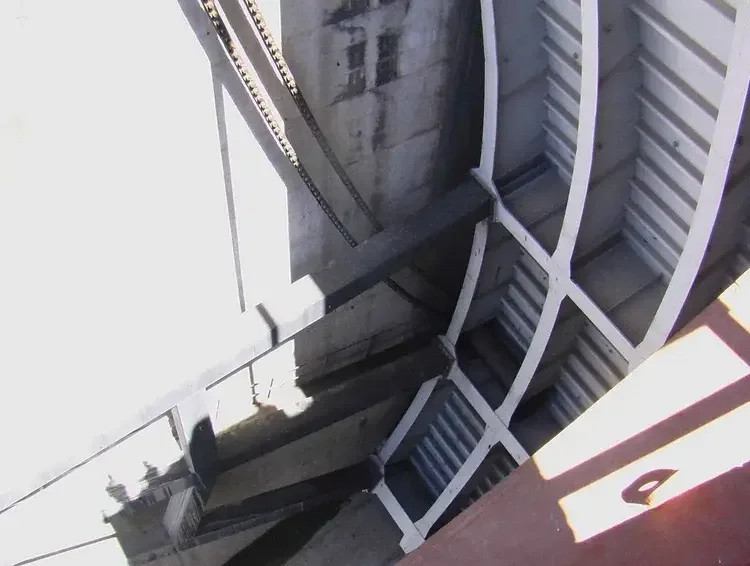
Industrial chains can operate in some remarkably demanding environments, and Caracol Dam in Guerrero, Mexico, provides a real-world example of Muscle Penetrating Oil SL-10™ being put to work.
At the dam, massive chains and sprockets help control the movement of sluice gates that regulate water flow. Keeping these mechanisms properly lubricated is an important part of maintaining their operation, particularly with large metal assemblies exposed to outdoor conditions.
Penetrating Oil SL-10™ is used to lubricate the sluice gate chains and sprockets, with applications scheduled every six months. The lubricant is sprayed directly onto the chains and links to provide penetration and continued lubrication within the moving components.
According to the application report provided by Muscle's representative in Mexico, the results were particularly encouraging after five months. Although the exterior surfaces of chains exposed to direct sunlight appeared dry, lubricant remained visible on chains located in the shade. More importantly, the report indicated that SL-10™ continued providing effective lubrication inside the chain links, even where the exterior appeared dry.
The Caracol Dam application demonstrates how SL-10™ can be used for heavy-duty industrial chain maintenance where penetrating into the moving components and providing continued lubrication are essential. While lubrication intervals vary by equipment and operating conditions, this installation provides a compelling example of SL-10™ in a demanding real-world application.
Read the full success story: Tough Applications in Mexico.
How to Lubricate an Industrial Chain Properly
Choosing the lubricant is only part of maintaining an industrial chain. Where and how it is applied can make a significant difference.
Start With a Safe, Clean Chain
Before beginning maintenance, follow the equipment's established shutdown and hazardous-energy control procedures. Industrial chains and sprockets create serious pinch and entanglement hazards, and some systems can retain mechanical or other stored energy after shutdown.
Inspect the chain for accumulated dirt, hardened lubricant, rust scale, and other material that could prevent fresh lubricant from reaching the joints. Remove loose contamination using a method approved for the chain and equipment. Avoid assuming that spraying additional lubricant over heavy contamination will resolve the underlying problem.
Apply Lubricant Where the Chain Articulates
For conventional roller chains that permit manual lubrication, direct the lubricant toward the openings between the inner and outer link plates, where it can reach the pin and bushing interfaces. Lubrication may also be needed between the rollers and bushings, depending on the chain design. These are the areas where chain components move against one another as the links articulate around the sprockets. Simply coating the outer surfaces of the chain or sprocket teeth may not deliver sufficient lubrication to these internal contact points.
When using Penetrating Oil SL-10™ or Extreme Conditions SL-10™, follow the product directions. Mix well before use, remove loose surface contamination, apply directly to the intended lubrication areas, and wipe away excess lubricant as directed.
Check the Results During Routine Maintenance
After lubrication and proper return to service, monitor the chain for changes in noise, movement, visible contamination, and signs of wear. The appropriate lubrication interval depends on chain speed, load, working environment, service hours, cleaning practices, and the lubrication system.
A chain exposed to frequent water spray or heavy contamination may need a different maintenance schedule from one operating in a clean, protected environment. Manufacturer recommendations and actual inspection findings should guide the maintenance interval rather than relying on one universal schedule.
Common Chain Lubrication Mistakes and When Maintenance Isn't Enough
Even a suitable lubricant cannot provide effective protection if it is applied incorrectly or the underlying equipment has a mechanical problem.
Applying lubricant only to the outside of a chain can leave the pin and bushing interfaces inadequately lubricated. Using a product with unsuitable viscosity or penetration characteristics may create the same problem. Excessive application can also encourage dirt accumulation or lead to unnecessary lubricant loss, depending on the operating environment. Another mistake is overlooking the rest of the chain drive. Incorrect tension, sprocket misalignment, damaged teeth, and worn or stiff links can contribute to irregular movement and accelerated wear.
Lubrication may help reduce friction, but it cannot restore metal already lost through wear. Chain elongation is particularly important to monitor because it develops as the pin and bushing interfaces wear. If the chain has exceeded its manufacturer's allowable elongation limit, replacement may be necessary. Severely corroded, cracked, distorted, or otherwise damaged components also require mechanical evaluation rather than simply another application of lubricant.
Good preventive maintenance combines appropriate lubrication with inspection of the chain, sprockets, alignment, tension, guards, and lubrication system.
Final Takeaway: Match the Lubricant to the Chain
The best lubricant for an industrial chain is one that reaches the required contact surfaces and meets the equipment's operating demands.
For exposed industrial chains and chain drives, Muscle Penetrating Oil SL-10™ provides penetrating action combined with heavy-duty, continued lubrication. Where moisture displacement and enhanced corrosion protection are also priorities, Extreme Conditions SL-10™ may be a more suitable option.
Start by identifying the chain type, lubrication method, operating environment, and manufacturer's requirements. From there, it becomes easier to determine which lubricant provides the appropriate combination of penetration, lubrication, and protection.
Explore Penetrating Oil SL-10™ and Extreme Conditions SL-10™, or request a quote for your industrial lubrication requirements.
Frequently Asked Questions
-
Generally, yes, unless the chain manufacturer specifies otherwise. Many conventional roller chains receive factory lubrication before packaging, but this initial lubrication does not necessarily cover the chain's entire service interval.
The manufacturer may require additional lubrication after installation or before commissioning. Check the instructions for the specific chain, including any factory-applied coatings, special lubrication systems, or maintenance-free designs.
-
That depends on the chain design and the manufacturer's lubrication instructions. For conventional roller chains, applying thick grease to the exterior is often ineffective because it may not penetrate into the pin and bushing interfaces.
Some specialized chains or operating conditions call for grease or other specific lubrication methods. Grease may also be appropriate for separate bearings or fittings associated with the equipment, even when the chain joints require oil lubrication.
key is making sure the lubricant reaches the intended working surfaces rather than assuming that a heavier product automatically provides better protection.
-
Noise that continues after lubrication can have several causes. The lubricant may not be reaching the internal joints, or the chain could have accumulated wear, damaged rollers, stiff links, incorrect tension, or sprocket alignment problems.
A noisy chain should be inspected rather than repeatedly treated with more lubricant in the hope that the sound will disappear. Follow proper shutdown procedures before checking the chain, sprockets, and associated drive components.
-
If the chain is designed for external lubrication, cleaning may remove some of the protective lubricant already present on its surfaces and within accessible joints.
Follow the manufacturer's cleaning and drying procedures, then restore the specified lubrication before returning the equipment to service. Pay particular attention to moisture remaining in the joints and any cleaning agents that could affect the fresh lubricant.
Certain specialized chains and equipment may have different requirements, so the approved maintenance procedure should take priority.
-
Not necessarily. Dust can combine with exposed lubricant and create abrasive contamination, but simply reducing lubrication frequency may leave chain joints inadequately protected.
The correct approach depends on the chain design, type of contamination, and lubrication system. Some dusty or abrasive applications require specialized chain designs, protective enclosures, different lubrication methods, or more frequent cleaning.
If abrasive contamination is a recurring issue, consult the chain or equipment manufacturer before changing the lubricant or maintenance interval.
Application Note
This article is provided for general educational purposes related to industrial chain lubrication and maintenance. Lubricant selection, application methods, inspection requirements, and maintenance intervals vary by chain design, equipment, and operating conditions. Always follow the chain and equipment manufacturers' recommendations and applicable machinery safety procedures, including hazardous-energy control requirements. Use Muscle products according to their current labels, Product Data Sheets, and Safety Data Sheets. Lubrication does not replace necessary cleaning, adjustment, inspection, or replacement of worn or damaged components.